Stock trading on Wall Street began on May 17, 1792, with the signing of the Buttonwood Agreement. Twenty-four brokers signed this pact under a buttonwood tree at 68 Wall Street, pledging to create a structured market for securities with fixed commissions, marking the origins of the New York Stock Exchange. It was still a long time before “Wall Street” became the financial capital of the world. At the time, the street was more well known for the 12-foot wooden wall the Dutch settlers built from the Hudson to the East River to protect their colony from invaders a hundred years before.
Now, back in 1792, buying shares in a corporation wasn’t illegal. They were a legitimate way to invest in businesses and claim a share of future profits. But before modern securities regulations, the market was subject to manipulation, insider dealing, sketchy promotions, high fees — and ordinary investors getting burned.
Over time, though, the benefits of equities markets clearly outweighed the costs. The slow institution of disclosure rules, the Securities and Exchange Commission (SEC) and modern market structures made stock investing feel safer and more credible to everyday Americans. Eventually, participation grew to the point that today, the majority of American families own equities (many through 401(k) plans).
Today, something similar is happening with cryptocurrencies…
How an asset goes mainstream
An asset class doesn’t go mainstream simply because early adopters believe in it.
It goes mainstream when the surrounding system becomes strong enough for ordinary investors to participate with confidence.
That’s what happened with equities. Buying shares in a company was always a simple enough idea: You provide capital, and in return, you may participate in the company’s future growth. But the idea alone wasn’t enough to turn stocks into a cornerstone of American retirement planning.
That took infrastructure.
It took exchanges where buyers and sellers could meet. It took brokers, custodians, clearing systems, reporting standards, research, retirement plans and eventually online platforms that made stock ownership feel familiar instead of exotic.
But infrastructure alone still wasn’t enough.
Markets also needed rules – and consequences for breaking them. Investors needed to know that companies had disclosure obligations, that brokers had responsibilities, that fraud and manipulation could be punished, and that there was at least some organized effort to protect market integrity.
None of that made stocks risk-free. It never has.
But it did make the market more understandable, more accessible and more credible to everyday Americans.
That distinction matters. Here’s why:
Regulation does not remove risk. It creates a framework for effectively evaluating risk.
And that is where crypto appears to be today. The infrastructure has been developing for years: exchanges, custodians, institutional platforms, compliance systems, reporting tools and retirement-account access through companies like BitIRA. What has lagged behind is the rulebook.
For many cautious investors, that missing piece matters. They may understand the long-term case for digital assets. They may see the institutional interest. They may even believe crypto has a role to play in a diversified retirement strategy.
But without clearer rules, many have stayed on the sidelines.
Now, that missing piece may finally be starting to fall into place.
Crypto regulation is moving ahead
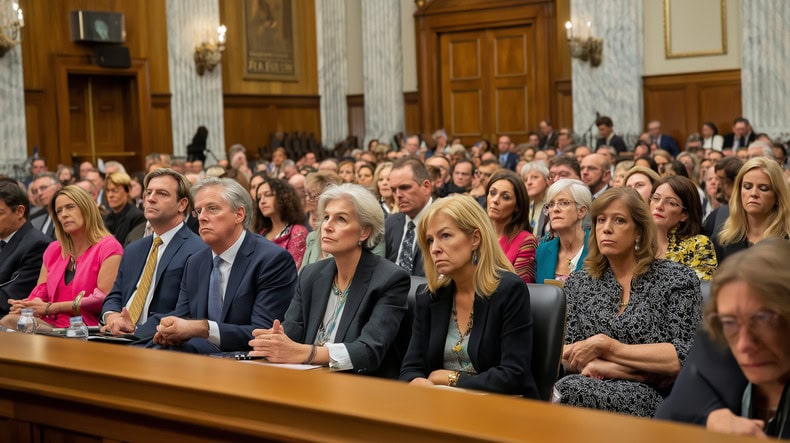
That is why the latest developments in Washington matter.
The biggest recent headline is that a key Senate roadblock may have been cleared. According to a recent Reuters report, Coinbase said negotiators had reached a compromise on one of the most contentious parts of a major crypto bill: Whether stablecoin issuers and crypto platforms should be allowed to offer rewards or yield-like benefits to customers.
That disagreement had become a major sticking point. Banks argued that yield-bearing stablecoin products could pull deposits away from the traditional banking system. Crypto firms argued that banning rewards outright would make it harder for them to compete and serve customers.
The reported compromise does not mean the debate is over. But it does suggest that lawmakers are moving from broad arguments about whether crypto should be regulated toward the harder, more practical question of how it should be regulated.
That shift is bigger than one provision in one bill.
The broader push is toward a clearer market structure for digital assets – including which assets fall under which regulator, what disclosures are required, how stablecoin issuers should operate, and what standards crypto firms must meet if they want to serve the public at scale.
That is exactly the kind of framework traditional markets developed over time. Investors did not need stocks to become risk-free before they became mainstream. They needed better information, clearer rules, more reliable infrastructure and consequences for bad actors.
Crypto appears to be moving in that same direction.
The SEC and CFTC have already taken steps toward clearer guidance on digital assets, including how certain crypto assets and transactions may be treated under existing securities laws. That kind of guidance matters because it begins to replace “regulation by enforcement” with a more predictable framework.
But guidance alone is not the same as law. Regulators can interpret existing statutes, but Congress is the body that can create the durable legal framework market participants have been asking for.
That is why the current push around the CLARITY Act matters: it is an attempt to move crypto out of the gray area and into a more formal set of rules. The White House has reportedly pushed for landmark crypto legislation to pass by July 4, another sign that market-structure legislation has become a near-term priority in Washington.
Stablecoins are another important piece of the puzzle. Recent reporting on proposed Treasury rules shows regulators are also focused on anti-money laundering, sanctions compliance, disclosure and the technical ability to block transactions involving sanctioned parties.
That may sound like bureaucratic detail, but it is exactly the kind of detail that helps determine whether digital assets can plug into the broader financial system.
At the same time, the SEC is reportedly weighing additional rulemaking around on-chain market structures and software applications – another sign that regulators are not simply asking whether crypto should exist, but how crypto activity should fit into existing financial rules.
None of this guarantees that legislation will pass on a particular timeline. Political deadlines can slip. Compromises can fall apart. Final rules can look different from early proposals.
But taken together, the direction is hard to ignore: The U.S. is moving closer to a formal rulebook for crypto.
For everyday investors, that could be a meaningful turning point. Clearer rules would not eliminate volatility. They would not remove risk. And they would not make every digital asset a wise investment.
But they could make the risks (and rewards) of the crypto market easier to evaluate.
That’s the real story here. The next phase of crypto adoption may not come from another wave of hype. It may come from the slower, less glamorous work of building rules, infrastructure and accountability around a market that millions of Americans are already watching.
For retirement savers, that matters. Many investors do not need crypto to be trendy before they consider it. They need to understand where it may fit, what risks are involved and whether the market is becoming mature enough to evaluate as part of a long-term diversification strategy.
That is why regulatory clarity matters.
If you’re looking into crypto for the first time and are in the process of doing your due diligence, you can get more information for education as part of that process by getting our free Crypto IRA Guide. If you already know that you’re ready to diversify into crypto, you can open your BitIRA account online (in just a few minutes) and start your diversification process.
