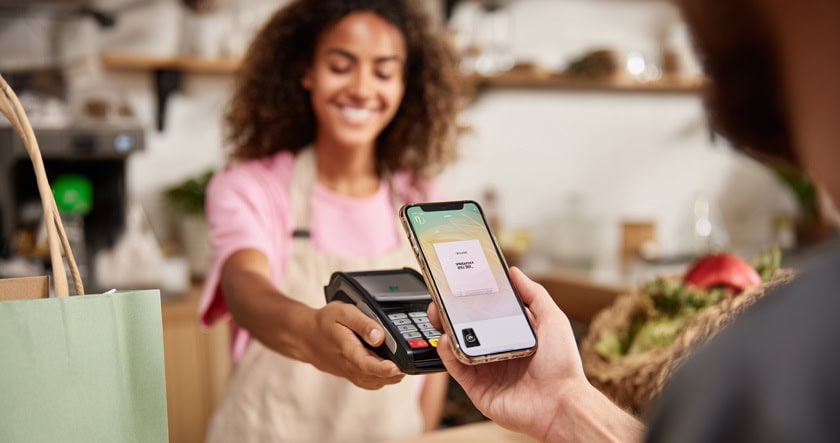
For years, many Americans associated crypto with exchanges, speculation and headlines about price swings.
But the next phase of crypto adoption will look much more familiar. A banking app already installed on a customer’s phone…
The reality of crypto
As I’ve said before, crypto has become less fringe and more mainstream over the last couple years. Crypto is, for many, just another part of their everyday financial lives, although many people don’t realize it.
The growing acceptance of crypto is, as regular readers know, due to regulatory clarity bringing a sense of security to retail investors – and because mainstream financial institutions are using crypto every day.
I’m not exaggerating that at all. Because, for some applications, crypto transactions are faster, cheaper and better for business use cases – see the DoorDash example here. Blockchain is so much more efficient that the $13 trillion repo market uses it daily. (That’s why I’m always calling crypto “the future of money.”)
Today, those financial institutions are going beyond using it for their internal workings (transaction settlements, funds transfers and so on).
They see crypto’s utility as so compelling, they’re giving their retail customers access, too…
SoFi makes stablecoins available to 15 million customers
In an exclusive story earlier this week, The Wall Street Journal announced SoFi Technologies added access to its own stablecoin (SoFiUSD) within its retail banking app.
Helene Braun with Coindesk writes that Sofi is “the first U.S. national bank to offer a stablecoin directly to retail customers on a public blockchain.”
SoFi is a $24 billion company, by the way. In other words, we aren’t talking about the Dogcatcher’s Credit Union here. Furthermore, SoFi holds a national banking charter approved by the Office of the Comptroller of the Currency (OCC) back in 2022. They offer FDIC-insured checking and savings accounts, along with credit cards, mortgages, personal loans and all the other services you’d expect from a traditional bank. Plus a wealth management division, brokerage services and – well, everything.
It’s rather amazing to me that a scrappy start-up like SoFi (founded in 2011) can go toe-to-toe with banking behemoths like JP Morgan (founded in 1871) in terms of services provided. Regardless, SoFi is the first bank to make a stablecoin available to every customer. You don’t have to fill out a special application or go through a separate on-boarding process, you just buy or sell SoFiUSD.
I take that to mean, crypto access in everyone’s bank app is coming. (Likely sooner than we think.) Here’s why: Stablecoin transactions offer benefits that typical payments don’t.
With stablecoin transactions, you can:
- Weekend and after-hours settlement
- Incredibly fast and inexpensive international transactions
- Making and receiving payments without sharing bank account details
- Paying for blockchain-native products or services
Crypto transactions on a banking app that you already have on your smartphone? Watch the crypto adoption rate surge… At least for folks who have actual use cases that align with the benefits of stablecoin transactions.
Which brings me back to my main point:
Crypto is becoming mainstream
Granted, that’s a debatable claim. There’s no quantifiable definition of what “mainstream” means.
If “mainstream” means widely known, broadly accessible, institutionally integrated and owned by a meaningful minority, then it’s hard to argue that crypto isn’t mainstream. But not if we define mainstream as, “used regularly by most Americans for payments.”
When I asked around my circle of friends, the general consensus seemed to be something like: Something is “mainstream” when normal people don’t consider it different, strange or unusual. By that definition, I think it’s fair to say that crypto is mainstream. Regardless of whether or not you agree with me on that, it’s impossible to deny that crypto is getting even more popular. For example, Visa tells us that there were $10.2 trillion in global stablecoin transactions over the last 12 months. An average weekday transaction volume over $24 billion. Now, those are big numbers!
On the other hand, this McKenzie report gives us the full scope of global transactions: $2.0 quadrillion in value over 3.6 trillion transactions.
What does that tell us? Two interesting things:
- Crypto is in daily use for transactions worldwide
- At the same time, crypto adoption still has massive growth potential
What are the two most important aspects of payment? I think they’re a) trust, and b) ease of use. Loads of work has been done on the ease of use end (SoFi is just the most recent story). What about trust?
The biggest critique of crypto has always been, Why should I trust this? This is just something a Japanese programmer made up. Why should I trust that it’s worth anything today, let alone tomorrow?
Crypto enthusiasts answer that question by saying, “Look at the code. It’s all there, and in crypto code is law.” Sure, that’s one kind of answer. But here’s another…
Consider that people already trust their banks. (Otherwise, they wouldn’t be banking there, would they?) That means they are so much more likely to trust the services the bank offers. And to trust crypto transactions made through the bank. That same trust plus ease of use is why their customers will be willing use stablecoins when they’re a better tool for the job at hand. I predict other banks will follow SoFi’s lead on this.
Frankly, they’d be foolish not to! After all, the bank wants to offer products and services to their customers that their customers want and need. Let me give you some examples:
- A small business importing inventory can pay an overseas supplier faster with stablecoins than with international bank wire
- Stablecoins can make it easier to send dollar-denominated payments to freelancers or contractors overseas
- A last-minute weekend or holiday transaction that must settle (like a deposit)
- In an emergency, a stablecoin transfer lets us send dollars internationally without waiting for traditional banking intermediaries
- For donors supporting international relief efforts, stablecoins can offer a fast way to send dollar-denominated support
Overall, I wanted to tell you three things today: First, about SoFi’s stablecoin move. Second, about the scale and scope of crypto payments currently in use. And finally, about the mind-blowing scale and scope of payments generally, which shows us just how much more room crypto has to grow.
This widespread and growing institutional acceptance is one reason that many people are choosing to diversify their portfolio into crypto now. If you’d like to find out about diversifying into crypto in a tax-advantaged way, get our free Essential Guide to Digital IRAs, and if you already know that you’re ready to diversify into crypto now, you can open your BitIRA account in just minutes to start the diversification process.
