For years, cryptocurrency existed in a kind of regulatory limbo. Big enough to matter, but not yet formalized. Widely used, yet still treated as an outsider by Washington.
That’s starting to change.
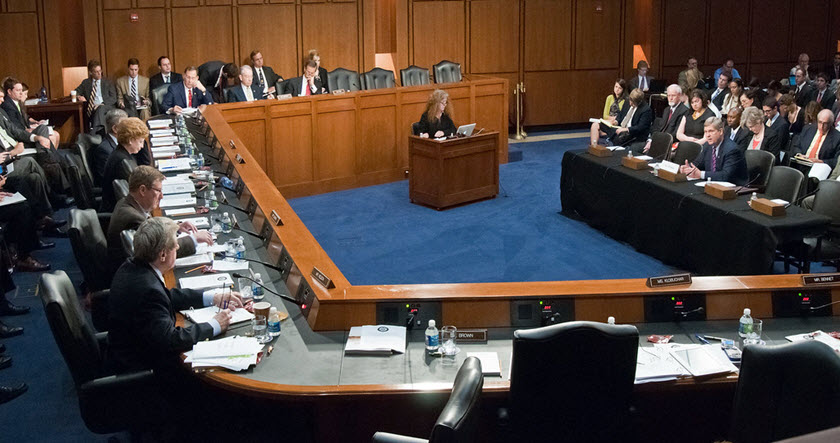
The U.S. Senate is now actively working on comprehensive federal crypto regulation – a clear signal that digital assets are no longer viewed as a fringe experiment, but as a permanent part of the financial system that lawmakers can no longer ignore.
As you might expect, the reaction has been mixed. Some investors worry that regulation will stifle innovation. Others see it as long overdue. But for everyday investors – especially those thinking about long-term wealth and retirement – the more important question is simpler:
What does this mean for you?
The short answer is that federal regulation doesn’t mark the end of crypto’s growth phase. In many ways, it marks the beginning of its next one.
For a large segment of investors, crypto has remained just out of reach – not because of a lack of interest! Rather, due to uncertainty. A lack of clear rules. A sense that the asset class was still the “Wild West.”
Washington stepping in changes that perception.
And as history shows, when an asset class moves from the margins toward formal recognition and structure, participation tends to follow – often quickly.
The Senate’s crypto regulation efforts
The first thing to know is that this legislation hasn’t been finalized yet, so, there are many different aspects of the regulations and many different issues around it that still have to be hammered out.
And these efforts certainly have a whirlwind of activity going on around them. Jesse Hamilton and Nikhilesh De with Coindesk note:
U.S. senators have filed over 75 amendments ahead of this week’s landmark crypto market structure legislation hearing, according to a document detailing the provisions obtained by CoinDesk.
Keep in mind that there are only 100 U.S. Senators, so, 75 amendments means that a solid majority of Senators are actively working on these regulations.
Given that it can be hard to get every Senator to be present for votes on any given piece of legislation, this seems to indicate that these regulations have been given high priority there by both major political parties.
And if you’re wondering what kinds of amendments have been proposed, they include a variety of things including trying to prevent public officials from “profiting from crypto interests” to amendments to please outside groups with an interest in the outcome of this legislation such as major banks.
At this point, nothing is entirely settled around the regulations.
What’s already settled in the bill
There is evidence of progress, though. Hamilton and De also write that the updated draft of the proposed regulations includes compromises on such things as stablecoin yields, securities regulations, and decentralized finance (DeFi) oversight.
In short, they’re making progress towards an end set of regulations.
As a side note, not to be outdone, the Senate Agriculture Committee announced that they will be having a hearing on their own crypto market structure bill towards the end of the month.
And while it may be humorous to read that (why would an agriculture committee be focusing on crypto markets?), that’s actually not a joke. At first glance, the U.S. Senate Committee on Agriculture, Nutrition, and Forestry weighing in on crypto sounds bizarre. But their involvement isn’t random.
See, the Agriculture Committee has jurisdiction over the Commodity Futures Trading Commission (CFTC). Bitcoin is widely viewed – even by regulators – as a commodity, similar to crude oil, gold, wheat or corn.
That classification puts large parts of the crypto market squarely in the Agriculture Committee’s lane. And the Agriculture Committee has overseen:
- Futures markets
- Derivatives contracts
- Hedging instruments
- Price discovery mechanisms
…for decades. So when the committee drafts a “crypto market structure bill,” what they’re really doing is:
- Defining which digital assets are commodities
- Clarifying CFTC authority over crypto trading venues
- Reducing turf wars between the SEC and CFTC
That’s not comic relief – it’s the sort of foundational plumbing that underlies all mature financial assets.
From an investor’s perspective, Agriculture Committee involvement actually sends a strong legitimacy signal:
- Crypto is being treated like an established asset class, not a novelty
- Lawmakers are debating who regulates it, not whether it should exist
- The focus is shifting from enforcement-by-lawsuit to formal market rules
That’s exactly the kind of transition that tends to make cautious, mainstream investors more comfortable engaging. Now, you may be saying, “All of this regulation is interesting and all, but why should I care?”
What does it really mean for crypto?
And it’s a smart question to ask.Here’s what I think: Crypto regulation is coming, and if you’re looking for more investors to get involved in crypto, you’ll see regulation as a good thing.
From the perspective of those who don’t follow cryptocurrencies and tech issues, crypto is too often still seen as a frontier, a sort of “Wild West” asset class (or even a gamble).
Of course, the truth is that it is anything but a gamble or dangerous investment option. Or, at least, no more risky than so many other investment options that massive numbers of investors work with everyday to grow their net worths.
The difference? The investments that average retail investors focus on are those that are already regulated by the government.
Why?
Many (most?) retail investors want growth potential, which means having risk. But investors, by their very nature, tend to be risk averse.
Federal regulation of an investment class brings a level of security and, in the mind of the average retail investor, safety to that investment class.
This means that the coming federal regulations will help risk averse investors to feel comfortable in starting to put money into crypto to take advantage of the growth opportunity.
Think of the regulations as speeding up the inevitable growing mainstream acceptance of crypto and with it the growing valuations that come with growth in demand. It’s coming; the regulations will speed up that process.
Federal crypto regulations are a win/win situation both for retail investors, who can benefit from crypto’s growth potential, and those already diversified into crypto, who will benefit from the increased valuation of their portfolios that increased demand brings.
The good news for you is that, if you’re already diversified into crypto, you will almost certainly see growth. That’s not a prediction, by the way – that’s just how supply and demand work. When the regulations are finally in place, I expect an absolutely tidal wave of interest and investment from those who’ve been intrigued but still sitting on the sidelines, waiting for their moment.
For those who haven’t, yet, diversified into crypto, you still have the opportunity to position yourself now ahead of everyone else who’s waiting for their moment. The good news it, you can open a Digital IRA with BitIRA right now – anytime, day or night – in less than 10 minutes.
And if you want to know about diversifying into crypto in a tax-advantaged way, get our free Essential Guide to Crypto IRAs now.
