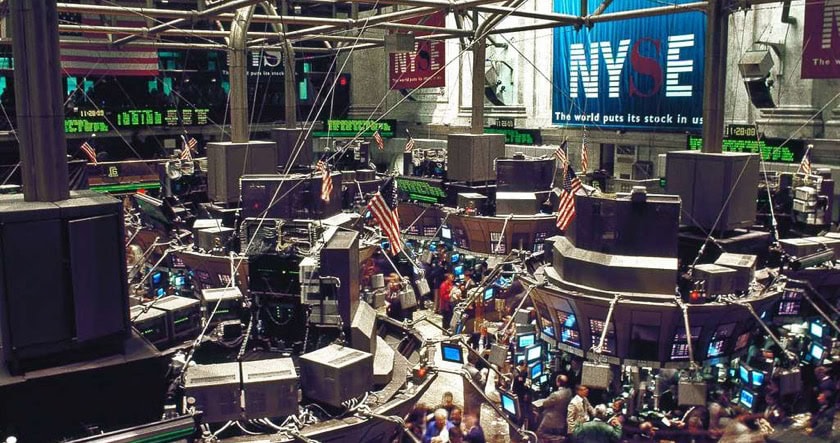
Public domain image via Library of Congress, Prints and Photographs Division, from the Carol M. Highsmith Archive
The naming of things is one of the oddities of human nature. I’m not referring to the tendency to give unusual or creative names to people or objects, but rather how names can shape the way we think about what they represent.
In many cases, a label becomes a shortcut for something far more complex.
For example, when people hear the term “automotive industry,” they may think primarily of car dealerships, maybe of factory workers on an assembly line. Those are only small parts of a much larger network.
The automotive industry includes vehicle manufacturers and sales outlets, of course. But it also includes parts manufacturers and suppliers, global logistics networks, dealerships (both new and used), automotive repair shops – even media outlets that review, test, and explain vehicles. All of these pieces are necessary to create, sell and service cars.
We have a tendency to use a simple term to describe a complex system. The example on my mind today, though, is “Wall Street.”
“Wall Street” and other reductionist thinking
A similar simplification often happens with the term “Wall Street.” Yes, it’s an actual place – we’ve all seen pictures, at least, of the famous bronze bull statue if nothing else.
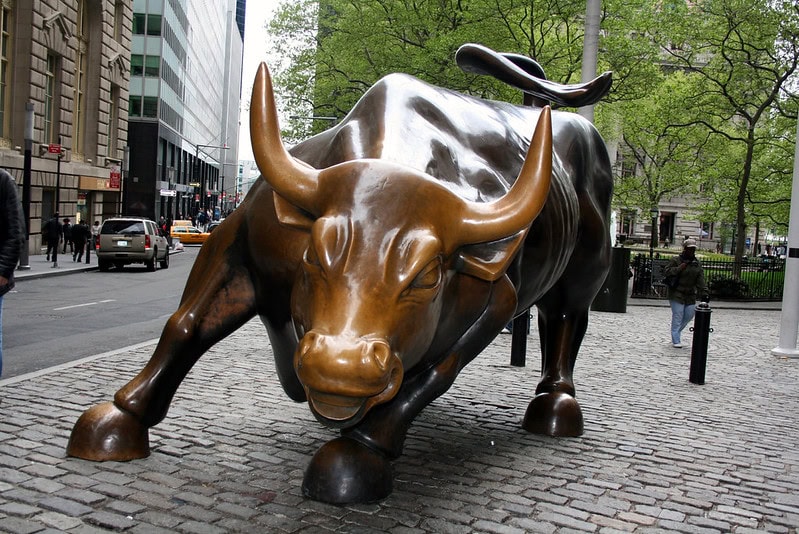
Not many people even understand where the name itself came from (the 12-foot palisade Dutch settlers built in the 1650s to protect their corner of Manhattan from uninvited guests).
Today, Wall Street is shorthand for stock brokers, big investment firms and financial markets generally. How many times have you heard someone use a phrase like, “On Wall Street, the Dow Jones Industrial Average is…” Rationally, this makes no sense! The Dow isn’t a physical thing, it’s a number maintained by a former book-publishing company that now delivers financial services.
Even so, when somebody says that, you know what they mean.
In reality, Wall Street is a sprawling financial ecosystem that includes big banks, market makers, asset managers, exchanges, clearing systems, custodians and infrastructure that keep global capital markets alive.
It is less a single place or a group of companies, and more a network that facilitates capital flows through the economy. Yes, I’m belaboring the point! It’s because I want you to understand the next part – and why it’s a bigger deal than the dollar figure reflects…
A recent example: Citadel Securities and Crypto.com
This brings us to a recent development reported by Leo Sun in The Motley Fool.
Citadel Securities, a major market-making firm that has been reported to handle a significant share of U.S. equity trading activity, recently invested $400 million in Crypto.com.
That is a substantial investment, and it’s tempting to focus on the number alone. I think the more important detail here is what the investment is supporting.
Rather than being a direct bet on cryptocurrency prices, the investment is focused on financial infrastructure – specifically, blockchain-based systems to support faster, more efficient trading and settlement.
According to Crypto.com’s press release, the funding will help expand tokenization infrastructure and support broader trading capabilities.
In practical terms, tokenization refers to representing traditional financial assets on blockchain-based systems, which have been delivering faster settlement and more efficient transfers. BlackRock once called tokenization “when real-world assets are represented on the blockchain.”
This isn’t speculative, by the way – the $13 trillion repurchase agreement (repo) market, maybe the biggest part of the capital markets you’ve never heard of, is already heavily involved in tokenization as I reported a couple of months back.
In other words, Citadel Securities doesn’t see this as a proof-of-concept investment. It’s an attempt to grab a big (and growing) piece of the capital markets infrastructure business.
Citadel has indicated interest in using Crypto.com’s infrastructure as part of broader trading capabilities across different asset classes. But let’s hear it from the decision-makers themselves:
“The convergence of traditional financial markets and digital asset infrastructure is an exciting evolution with the potential to further improve market efficiency.”
Jim Esposito, president, Citadel Securities
And:
“The size of the opportunity in front of us is staggering, as crypto increasingly becomes the rails for finance.”
Crypto.com CEO Kris Marszalek
This is a small part of a broader trend on Wall Street – one that’s been coming up regularly so far this year…
The broader trend of Wall Street’s big blockchain bets
The Citadel Securities investment isn’t taking place in isolation. And it’s not just another “me too” digital asset treasury (DAT) investment (those haven’t really been working out so well recently…)
Reuters reports that a number of financial institutions are exploring blockchain-related infrastructure, including areas such as custody, settlement, and stablecoin-related systems.
That’s right! In one sense, the traditional financial services sector is diversifying with cryptocurrencies.
It might not surprise you to learn that the opposite is true, as well. Reuters also tells us, “Several pure-play crypto firms have diversified beyond digital assets in recent months, reflecting a broader push to become full-service financial platforms.”
Yep – cryptocurrency companies are diversifying, too!
Diversification across sectors makes sense for businesses the same way it makes sense for investors.
The common theme isn’t necessarily cryptocurrency trading itself. We’re looking at the underlying systems that support financial transactions.
In other words, the focus is increasingly on efficiency, settlement speed, infrastructure modernization – and diversification.
What does this mean for investors?
I can’t say this single investment is a direct signal about the future crypto prices. However, I believe developments like this are extremely relevant to how investors think about the role of blockchain technology generally (and crypto as well) in capital markets over the long term.
Investors considering diversification with crypto really should do their due diligence, understand the promise of the technology and its use cases.
Too many investors express confidence in cryptocurrencies, even when they don’t really understand them. For example, Forbes has reported on investor sentiment and knowledge gaps in the space.
It’s not wrong to be interested in the space, far from it. What’s important to understand – same as with any emerging technology – is that education and understanding should come first. As Warren Buffett has often emphasized, investors should avoid putting money into assets or businesses they do not understand.
Long-term investing benefits from knowledge and clarity, not speculation and hope.
Final thoughts on crypto’s present and future
As blockchain technology becomes more integrated into financial infrastructure, I expect they’ll stay top-of-mind for both institutional and retail investors.
If you’re exploring diversification with cryptocurrencies, the key question may not be whether crypto is “good or bad,” but how crypto fits into your overall investment allocation. That’s why we put together a free Essential Guide to Digital IRAs. On the other hand, if you’re ready to start diversifying into crypto now, you can open your very own BitIRA account online in just minutes.
